
Simple Content Strategy for Small Teams: A Clear Guide
Small teams create content every week, often without a clear system. Ideas come in fast, deadlines slip, and work depends on whoever has time that day. A simple content strategy removes guesswork and helps the team stay consistent. In a 2025 Marketing Trends Report, 57% of small teams shared that inconsistent planning slows their growth.
This guide shows how to fix that without building a complex system.
What a Simple Content Strategy Really Means
A simple content strategy is a repeatable plan that stays realistic for a small team. It does not require full campaigns or large approval chains. It focuses on clear messaging, weekly structure, and easy workflows.
Most small teams struggle because they follow models meant for big teams with multiple editors, strategists, and analysts. A simple approach values consistency over volume and clarity over large frameworks. This structure works even when one person handles writing, publishing, and reporting.
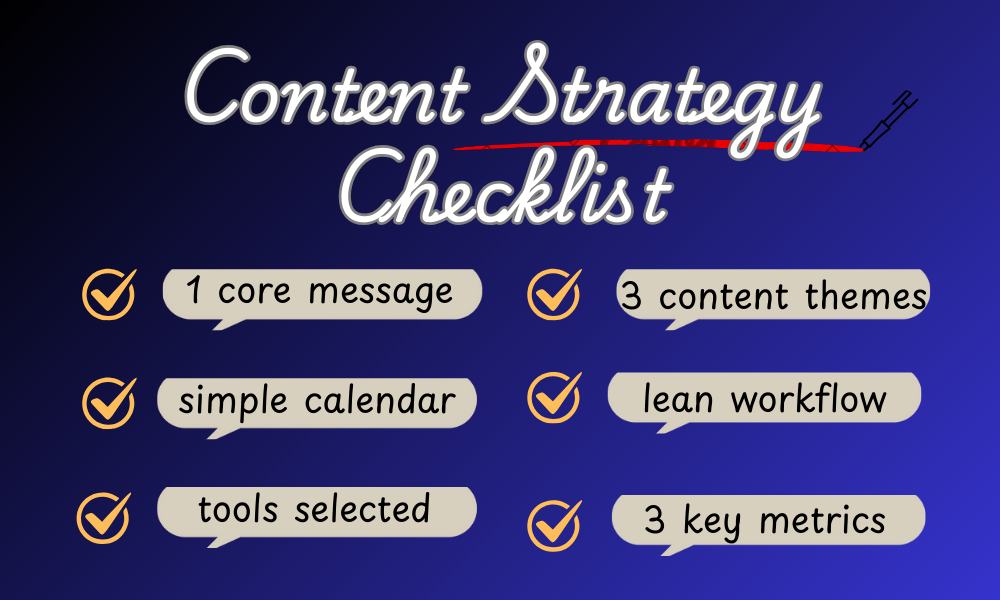
Step 1: Identify One Core Message
Every team needs one message that guides all content. This anchors the brand and reduces confusion. The core message answers one question: what should people remember every time they see your content?
According to a recent study, 63% of consumers said consistent messaging increases trust. This shows how important a stable message is for small teams that cannot afford scattered output.
Keep the message short and clear. It should match the service, the people behind it, and the audience’s vocabulary. When the message is simple, every team member can use it without asking for clarification.
Step 2: Choose Three Main Content Themes
Themes prevent decision fatigue. They give the team a clear boundary for ideas and help keep content recognizable.
Good themes cover three areas:
• What the audience needs
• What the team knows
• What supports the core message
Three themes are enough. They keep the calendar structured and give the team a sense of direction.
Step 3: Map a Basic Content Calendar
A small team needs a calendar that feels light and predictable. The goal is consistency. Not volume.
Start with these simple options:
• One post per week
• Two posts per month
• A short-form update every Wednesday
Small teams often overload themselves because they plan like agencies. A simple rhythm works better. It provides stability even when schedules get tight.
In Semrush’s 2025 Content Consistency Survey, high-performing small teams published on a predictable schedule at least 80% of the time. They performed well even with low volume.
The calendar should show:
• What gets published
• Who creates it
• When it goes out
No large spreadsheets required. A simple view is enough.
Step 4: Build a Lean Workflow
A workflow with too many steps slows down small teams. The ideal setup has three parts: create, review, publish. This prevents long delays and avoids the usual confusion around approvals.
Each person should know what they own. If the founder is the final reviewer, set a clear review timeframe. If the team has a writer and a manager, define their roles in plain language.
Step 5: Use Tools That Reduce Workload
A tool only helps when it removes manual work. Small teams often use too many tools. Pick one place for planning and stick to it.
Good options:
• Notion or Trello for tasks
• Google Docs for writing
• A simple tracking sheet for publishing
Avoid large platforms that need heavy setup. The goal is a single workspace where everyone sees the status of each piece.
In ClickUp’s 2025 Productivity Benchmark, teams that used fewer tools reported less context switching and better focus.
Tools are meant to support the strategy, not complicate it.
Step 6: Measure Only What Matters
Reporting can overwhelm small teams. The goal is to measure progress without drowning in dashboards.
Track only three things:
• Output consistency
• Engagement trend
• Actions that show interest such as replies, clicks, and messages
These metrics show whether the content is moving the audience forward. Avoid long monthly reports.
According to Statista’s 2025 Small Business ROI Snapshot, teams tracking fewer metrics saw clearer patterns in performance and improved decision making.
Simple reporting guides better content decisions.
Common Mistakes Small Teams Make
Small teams often face the same problems.
• Producing content without a clear message
• Switching themes too often
• Planning more content than the team can finish
• Using tools that slow them down
• Creating posts without linking them to the audience’s daily needs
These mistakes happen when strategy becomes too large for the team’s capacity. A simple system keeps things manageable.
Examples of How Small Teams Can Apply This
Two person agency
They choose three themes, assign rotation on weekly tasks, and keep a one week buffer. One writes. One reviews. They publish every Monday. Their calendar stays predictable.
Founder led brand
The founder handles ideas and message direction. A part time writer structures and drafts content. Publishing happens once a week. The message remains consistent because the founder sets the tone.
Small service business
The manager collects customer questions. These become content themes. One staff member drafts the posts. The manager reviews. They publish twice a month. The themes match real customer concerns.
Next Steps for Your Team
Start with one part of this framework. Pick your core message or set your three themes. Once that is clear, the rest becomes easier to manage. A simple strategy gives your team enough structure to stay consistent without pressure.
If you want a version of this guide tailored to your team size, workflow, and current content goals, I can help you refine it. Just share your team setup and I will adjust the system for your needs.
Need a simple content strategy built for your team? Reach out anytime.